Boxabl Site Prep & Utilities: The San Diego Owner’s Guide
Site prep and utility work for a Boxabl unit in San Diego typically runs $18,000 to $45,000 depending on your lot, how far the service trench has to go, and what SDG&E and the city require. We stock the common Boxabl-compatible connection hardware on our trucks and can usually start utility rough-in within two weeks of permit approval. Most owners discover a problem when SDG&E flags the service drop, the city inspector fails the trench depth, or the unit shows up and the pad is out of tolerance.
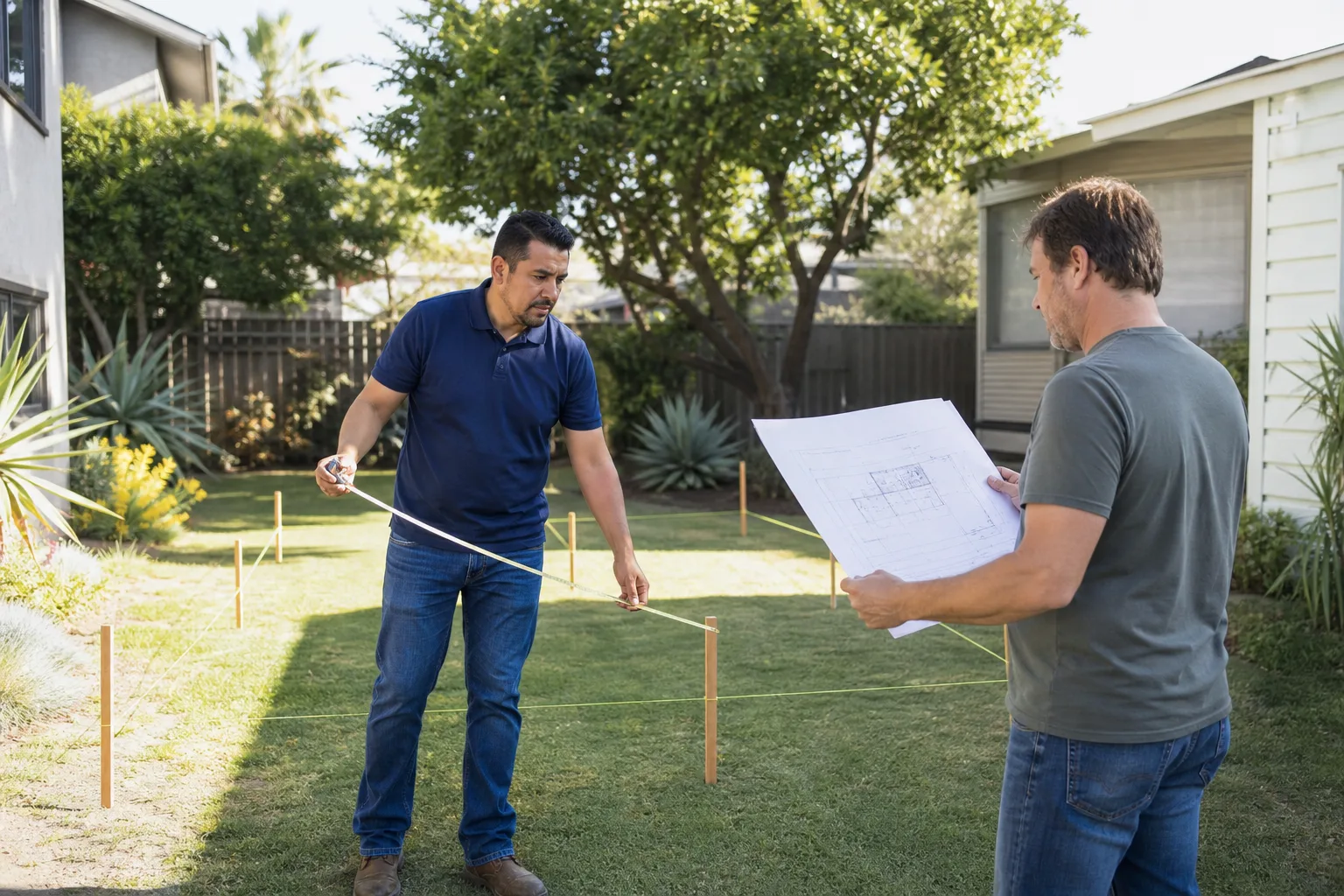
You bought a Boxabl because the factory does the hard part inside a controlled building. What still has to happen on your dirt is land work: grading, compaction, the pad or foundation, trenching for water, sewer, and power, and the final connections the factory can’t do for you. That’s where we come in. Fielding ADU San Diego is an independent contractor, not affiliated with Boxabl, and we handle the part of the project that can’t be folded and shipped.
Which Boxabl Models This Applies To
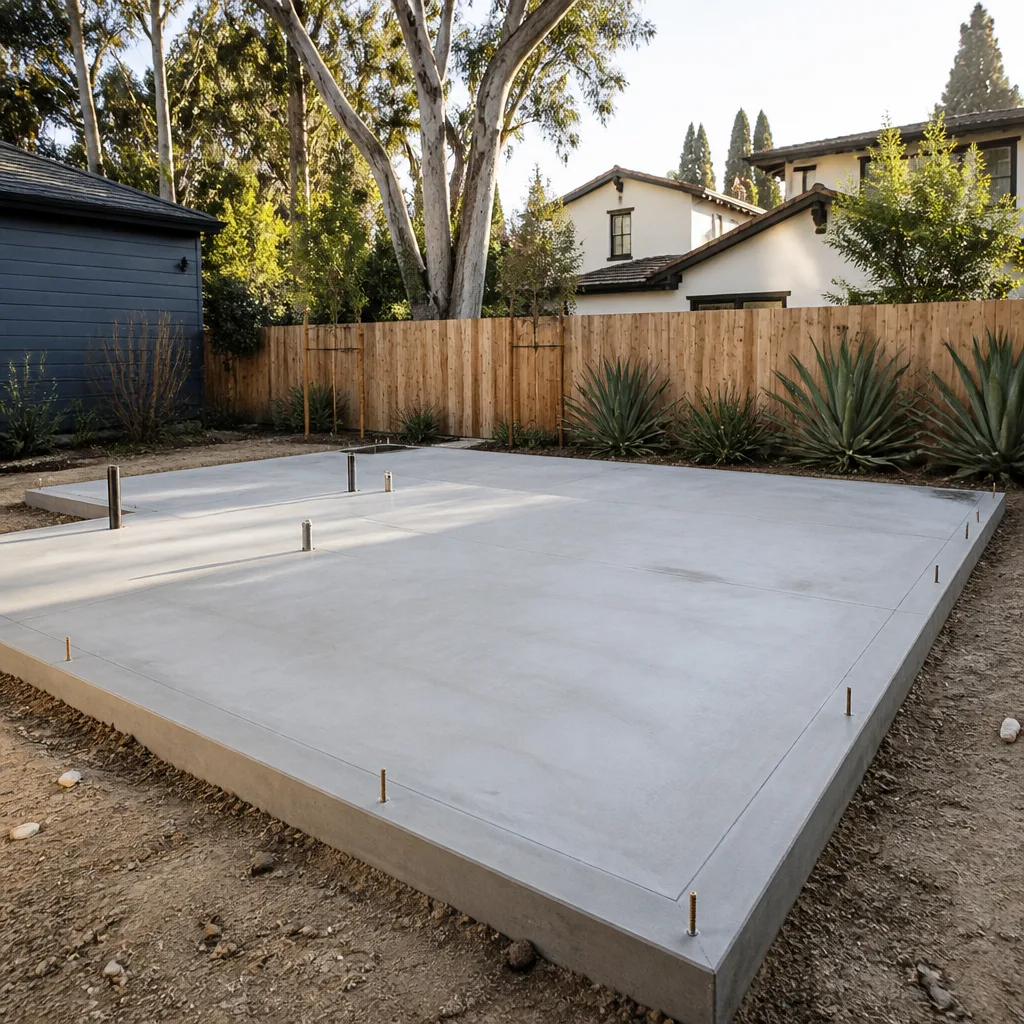
The current production Boxabl Casita ships as a 19-foot by 19-foot folding module, roughly 361 square feet, weighing about 12,000 to 13,000 pounds depending on options. That weight and footprint dictate your site prep: you need a level pad or stem-wall foundation rated for the distributed load, and the utility stubs have to land within the hookup zone specified on the Boxabl installation drawing.
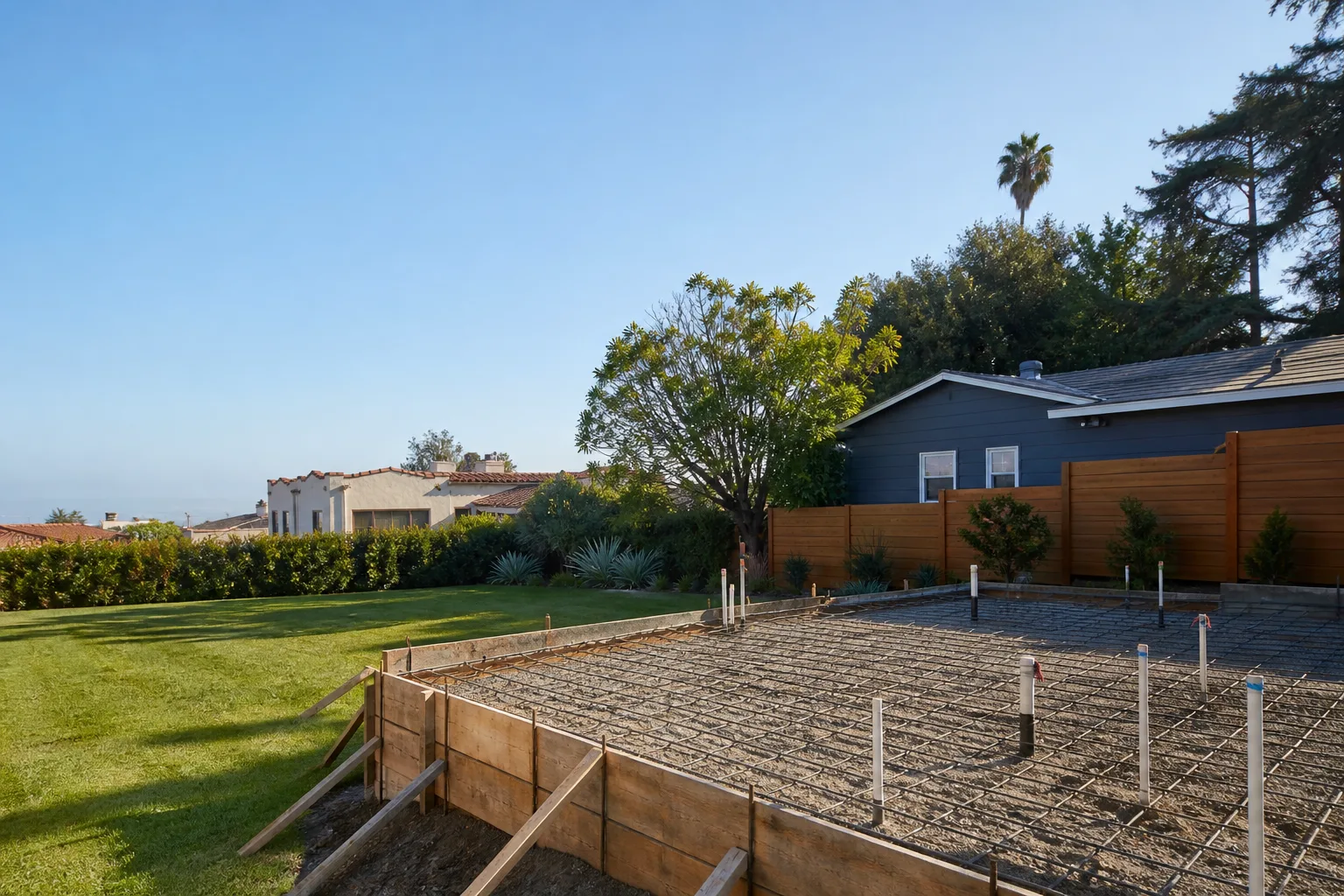
The compatibility gotcha we see most in San Diego is this: Boxabl’s plumbing connections are positioned for a specific wall penetration location, and if your trench doesn’t line up within a few inches, the factory-supplied flex connectors get stressed or the inspector makes you redo the stub-out. We verify the hookup points against the actual unit drawings before we dig, not after. For most Boxabl units, we recommend OEM-spec connection kits for the water and electrical terminations because the tolerances are tight. For the pad itself, a properly engineered concrete slab with rebar per San Diego structural requirements works as well as anything Boxabl suggests, and it often costs less than specialty pad systems.
Signs Your Boxabl Site Prep & Utilities Are Failing
- The pad has settled or cracked at the corners. In San Diego, expansive clay soils in neighborhoods like Clairemont and parts of East County move with the rain. A pad that wasn’t compacted in lifts or lacks proper rebar will telegraph stress up into the unit’s floor assembly, and you’ll see doors that no longer close square.
- Water pressure drops when more than one fixture runs. This usually means the supply line was undersized from the meter or the trench was too shallow and the line is kinked. We see it most often on lots where the ADU is set far back from the street.
- Sewer smell near the unit or slow drains. The waste line wasn’t bedded properly, has a belly, or the vent was tied in wrong. San Diego requires specific slope on the lateral, and getting it wrong means you’re redoing the trench.
- The main breaker trips when the Boxabl’s heat pump kicks on. The feeder conductors are too light for the startup draw, or the connection at the panel wasn’t torqued correctly. This is an electrical fault that can arc, so it should not wait.
- Standing water pooling against the pad. The finish grade doesn’t slope away from the unit, or the site drainage wasn’t thought through before the pad was poured. In San Diego’s wet winters, this becomes a moisture intrusion problem inside the Boxabl within a season or two.
Replacement Cost & What’s Included
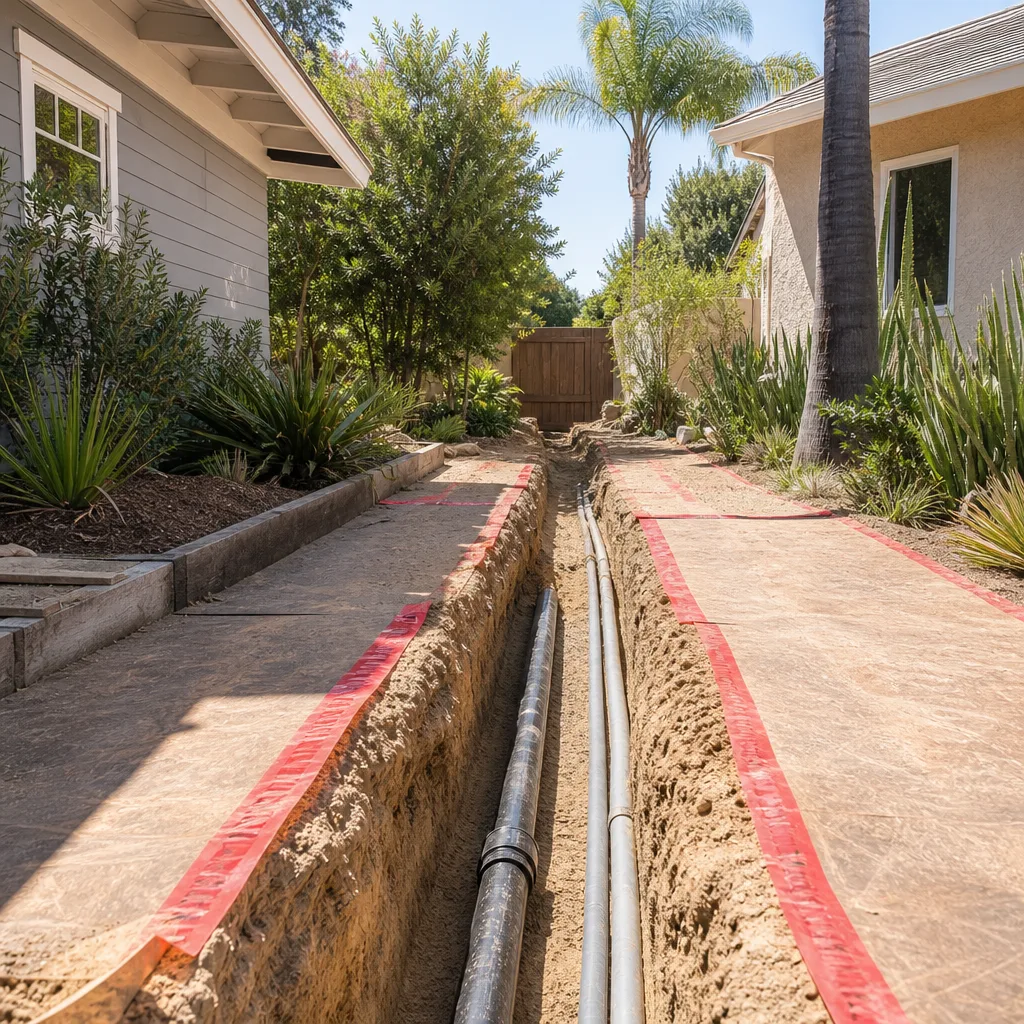
Here’s how the San Diego numbers break down for Boxabl site prep and utility work, before permit fees:
- Grading, compaction, and pad (20’x20′ engineered slab): $8,000 to $14,000
- Water service line trenched and connected from main: $2,500 to $4,500
- Sewer lateral and connection: $3,000 to $6,000
- Electrical feeder and subpanel, trench from main panel: $3,500 to $7,000
- Final utility hookups to the Boxabl unit: $1,000 to $2,500
The spread depends on trench length, soil conditions, how far the unit sits from existing services, and whether SDG&E requires a panel upgrade. Every number goes in writing before any work starts, and the price you approve on day one is the price on the final invoice. Our work is covered by the Garrison Standard: a written one-year guarantee. If something fails because of our workmanship inside that year, we return and correct it at no charge.
DIY or Call Us?
An owner can check a few things safely: look for visible pad cracking, confirm the unit sits level, note any damp spots where utilities enter, and verify the breakers aren’t warm to the touch after the heat pump runs for an hour. That’s 15 minutes and costs nothing.
What you should not do is open an energized panel, dig near an SDG&E service drop without an 811 locate, or rebed a sewer line yourself. Electrical and gas work on an ADU in San Diego has to be permitted and inspected, and a failed underground splice or improper trench depth will fail inspection and have to be redone. We’ve pulled permits in San Diego for years, and the inspector looks at our trench the same way he looks at yours: by the code book. If you’re not sure whether your issue is surface or serious, call (858) 264-3027 and we’ll tell you straight what it looks like from what you’re describing.
FAQs
A typical San Diego Boxabl site package takes two to four weeks from first grade cut to final utility sign-off, assuming permits are already issued. Trench work and the pad pour go fast; the schedule stretches when SDG&E has to schedule a service disconnect or upgrade. Call (858) 264-3027 and we’ll give you a written timeline based on your actual lot.
Sometimes yes. A cracked pad can often be repaired with epoxy injection and added drainage if the slab is structurally sound underneath. A sewer line with a belly or a kinked water line usually has to be replaced because the pipe itself is failed, not the connection. We’ll tell you which one you have before you spend a dollar.
We stock common Boxabl-compatible water and electrical connection components on our trucks in San Diego, so we’re not waiting on a factory shipment for most hookups. If your unit needs a specific OEM termination kit, we’ll order it and the price goes in the written estimate before any work starts.
Yes, San Diego requires inspection on trench depth, electrical connections, and sewer laterals before the trench is backfilled. We pull the permits, call the inspections, and don’t backfill until the inspector signs off. That’s just how the work has to be done here, and it’s the same standard we’ve held for every job since we started doing San Diego ADUs.
We do. The same site prep and utility crews handle Abodu, Cover, and Dvele units, plus conventional builds with James Hardie siding and Tuff Shed-style structures. Most of the land work doesn’t change from brand to brand; what changes is the hookup point and the tolerances, and we check the drawings for whatever unit you have.
If you’ve got a Boxabl arriving and the site isn’t ready, or you’re looking at a failed utility connection on a unit that’s already set, call (858) 264-3027. We’ll put the price in writing, pull the permit, and do the work. That’s the whole arrangement.
Written by Reed Calloway, Owner, Fielding ADU San Diego at Fielding ADU San Diego, serving San Diego and nearby areas.