Tuff Shed New Detached ADU: The San Diego Owner’s Guide
We stock and install Tuff Shed-compatible components for new detached ADU builds across San Diego, with most hardware replacement runs priced between $145 and $480 installed depending on the part and your shed’s series. Same-day service is common for our San Diego customers when we have the part on the truck, which we usually do for the Premier and Pro Studio lines. Where owners typically run into trouble is with the foundation anchor system and the roof tie-down hardware in the first 18 months of a new detached ADU conversion, especially on lots within a few miles of the coast where salt air accelerates galvanic corrosion on the factory anchor bolts.
Here’s the thing most owners don’t realize until it’s too late: a Tuff Shed built as a storage unit and a Tuff Shed being converted to a detached ADU are not the same structure in the eyes of San Diego’s building department. The hardware that was fine for holding a lawnmower is not automatically code-compliant for a sleeping space, and that’s where we end up doing most of our parts replacement work. Reed Calloway has pulled more permits on these conversions than he cares to count, and the pattern is always the same: the shed was delivered stock, the homeowner started the ADU process, and the plan checker flagged the anchors, the shear wall hardware, or the Simpson ties as undersized for residential occupancy.
Which Tuff Shed Models This Applies To
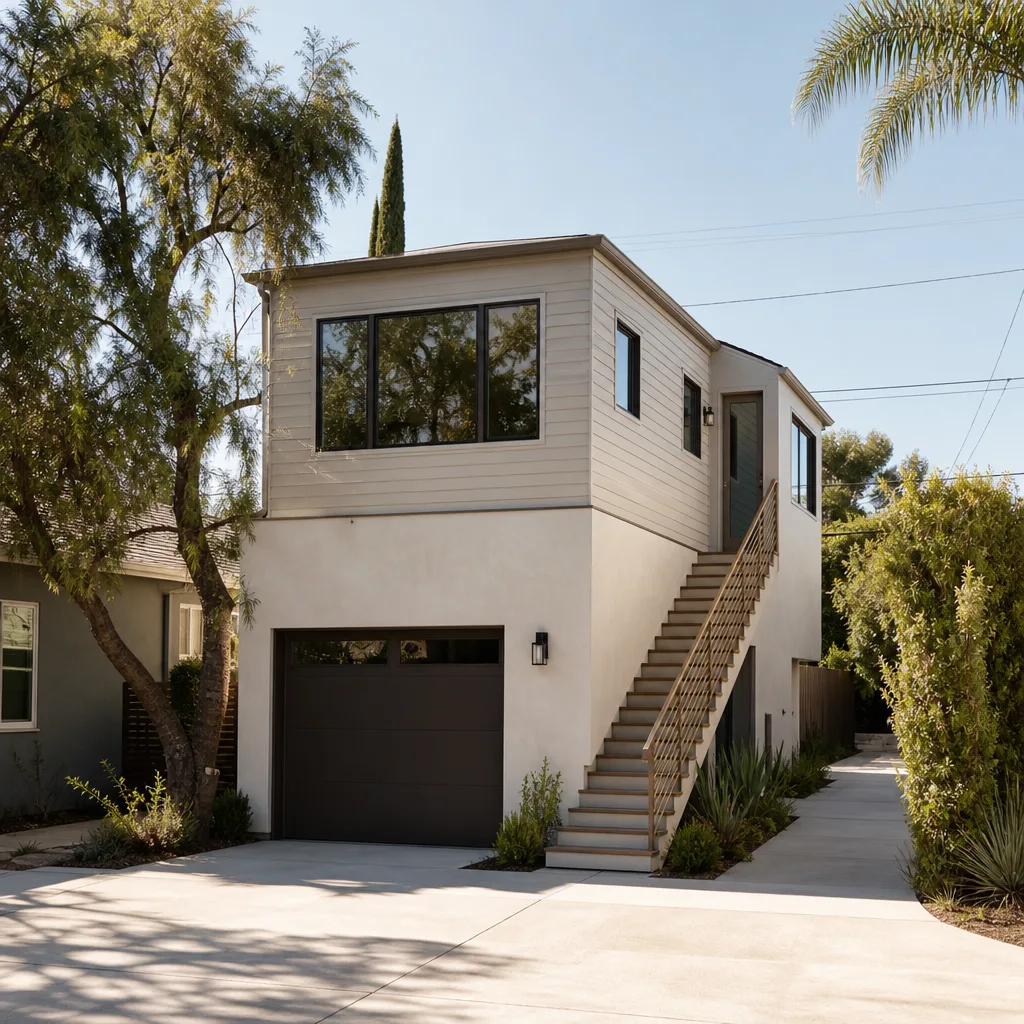
We field parts calls for every Tuff Shed line sold in San Diego County, but the new detached ADU work concentrates on three series: the Pro Studio, the Premier Pro, and the Premier Ranch. Each one uses a different anchor spacing pattern and a different sill plate configuration, and mixing them up is the fastest way to fail a framing inspection. The Pro Studio ships with a 2×4 floor-joist system on pressure-treated skids, which means the anchor retrofit has to tie through the skid into the slab, not just through the bottom plate. The Premier Pro uses a 4×6 skid system, and that changes the bolt length requirement entirely. The Premier Ranch is the one we see most often converted to a full detached ADU in San Diego because it’s wide enough for a studio layout without a dormer, but its factory roof ties are rated for storage, not occupancy, and they need to be upgraded to H2.5A or similar before the roof will pass.
On the compatibility side: Tuff Shed’s factory part numbers are laser-etched on the anchor brackets and stamped on the tie plates, but the numbers only matter if you’re ordering OEM replacements directly from Tuff Shed. We stock quality aftermarket equivalents from Simpson Strong-Tie, USP, and MiTek that meet or exceed the OEM spec for San Diego’s seismic and wind load requirements. The one place we do not substitute aftermarket is the door header hardware on the Pro Studio line: Tuff Shed uses a thin-gauge steel header clip that aftermarket parts do not match cleanly, and trying to make a generic clip fit usually means shimming, which a San Diego plan checker will flag every time. If a reader is unsure which series they have, measure the skid height: 4 inches is Pro Studio, 6 inches is Premier Pro, and 8 inches is Premier Ranch.
Signs Your Tuff Shed New Detached ADU Is Failing
- Shed walks or shifts during wind events. This is an anchor failure. In San Diego’s Santa Ana season, an unanchored or under-anchored Tuff Shed can shift an inch or more off its pad, and once it moves, the door falls out of square and the roof seams open up. The cause is almost always that the factory skimped on anchor spacing or the original installer bolted into soil instead of concrete.
- Door drags across the jamb or won’t latch. On a converted ADU, this rarely means the door itself is bad. It usually means the shed frame has racked because the shear panel hardware was never upgraded from storage-grade to residential-grade. The fix is re-squaring the frame and adding the proper shear transfer ties, not adjusting the hinges.
- Roof feels spongy or you can see daylight through the ridge seam. Tuff Shed roof panels on the older Pro Studio line are held with exposed fasteners and a rubber washer system that degrades in San Diego’s UV. Five to seven years in direct sun is the real-world lifespan for those washers in a coastal climate, and once they crack, water follows the fastener threads straight into the framing.
- Moisture staining along the bottom plate, especially on the west and south faces. Salt air plus irrigation overspray equals premature rot at the sill. The pressure-treated plate holds up, but the gap between the plate and the slab wicks water, and the untreated rim joist above it is what rots. That’s a structural replacement, not a paint job.
- You hear popping or creaking when you walk across the floor. On a Pro Studio converted to an ADU, the factory floor joists are spaced for storage loads, not for a bed, a kitchenette, and two people. The popping is the joist hangers flexing, and left alone long enough, the hangers fail at the nail line. We re-space and double up the joists before we ever put finish flooring down.
Replacement Cost & What’s Included
Here’s the straight pricing, same numbers we’d quote a San Diego homeowner over the phone before we ever roll a truck. Anchor bolt retrofit on a Pro Studio or Premier Pro typically runs $185 to $340 per shed, depending on how many anchors the current slab layout allows and whether we need to epoxy-set the new bolts. Roof tie-down upgrades land between $220 and $410, and that includes the Simpson hardware, the labor, and the signed sign-off for your permit file. Door header hardware on a Pro Studio is a tight $95 to $135 job. A full sill plate and rim joist replacement on an older unit with rot runs $650 to $1,100, and that’s a one-day job for our crew in most San Diego neighborhoods, from Chula Vista up to Oceanside.
The written price includes the part, the install, haul-away of the old hardware, and our one-year written guarantee under The Garrison Standard. We hand you a line-item price before any work starts, and that’s the number on the final invoice. No change orders, no “we found something else,” no surprises. If the replacement fails within 365 days, we come back and make it right at no charge. That’s the same guarantee Reed has stood behind since he started running crews out of the Garrison Partners family in 2006.
DIY or Call Us?
A homeowner with a cordless impact and a torque wrench can safely replace the roof fastener washers on a Tuff Shed, and we tell people that plainly. If you want to re-torque your existing anchor bolts to spec, that’s a twenty-minute job with a socket set. The number to hit is 50 foot-pounds on the Pro Studio anchors and 65 on the Premier Pro, and marking each bolt head with a paint pen after torquing means you’ll see immediately if one backs off later.
What a homeowner should not DIY is the tie-down retrofit, the shear wall upgrade, or anything that touches the door header. Those are high-tension components under load, and in a San Diego ADU conversion, they’re also the parts the building inspector checks first. An under-torqued Simpson tie looks tight and fails under the first Santa Ana gust. Get it wrong and the roof is the cheap part of the repair. If those parts are in play, call us at (858) 264-3027 and we’ll put an exact price in writing before the first bolt comes off.
FAQs
How long do Tuff Shed roof fasteners last in San Diego’s climate? The factory rubber washer fasteners on Pro Studio and older Premier Pro roofs last five to seven years in a sunny San Diego climate before UV cracking lets water in, and coastal locations within two miles of the ocean cut that to around five years flat. The fasteners themselves don’t fail: the washers do. We replace them with EPDM washers rated for 15-plus years in full sun.
Can the anchor hardware be repaired instead of replaced? Sometimes, yes. If the bolts are still in solid concrete and just need re-torquing and new washers, that’s a repair. If the bolt has pulled out, wobbled, or was set in soil, there is no repair: the bolt comes out, we epoxy-set a new one, and you’re done. A loose anchor near the corner of a converted ADU is the one we won’t patch, because a corner anchor failure is what lets the whole structure rack in a windstorm.
How long does the average parts replacement take? An anchor retrofit runs two to three hours. A full roof tie-down upgrade is a half-day. A sill plate replacement with rot damage runs one full day for our crew. We can often schedule the truck for the same week you call, and our live-person line at (858) 264-3027 means you’ll talk to a person, not a voicemail queue, when you call to set it up.
Do you stock Tuff Shed parts on the truck, or do they have to be ordered? Our San Diego trucks carry the common-aftermarket equivalents for Tuff Shed anchor brackets, Simpson shear ties, EPDM roof washers, and header clips for the Pro Studio and Premier Pro lines. The one thing we sometimes order in is the OEM thin-gauge door header clip for the Pro Studio, because as we said earlier, the generic ones don’t fit cleanly and we won’t shim a safety component. Most jobs are done same-day from truck stock.
Written by Reed Calloway, Owner, Fielding ADU San Diego at Fielding ADU San Diego, serving San Diego and nearby areas.