Tuff Shed Site Prep & Utilities: The San Diego Owner’s Guide
Fielding ADU San Diego stocks and installs Tuff Shed-compatible site prep and utility components, including foundation blocking, tie-down systems, and electrical rough-in packages. Installed pricing in San Diego typically runs $1,400 – $4,800 depending on site conditions, utility runs, and whether permits are required. Most owners discover these components have failed when the shed floor starts sponging, a corner separates from its blocking, or an outlet goes dead inside the building. We keep common Tuff Shed-compatible hardware on our trucks, so most site prep and utility corrections are completed in a single visit.
We’re an independent San Diego contractor, not a Tuff Shed dealer. That matters because we’re not here to sell you a new shed. We’re here to fix the ground work and utilities under the one you already own.
Which Tuff Shed Models This Applies To
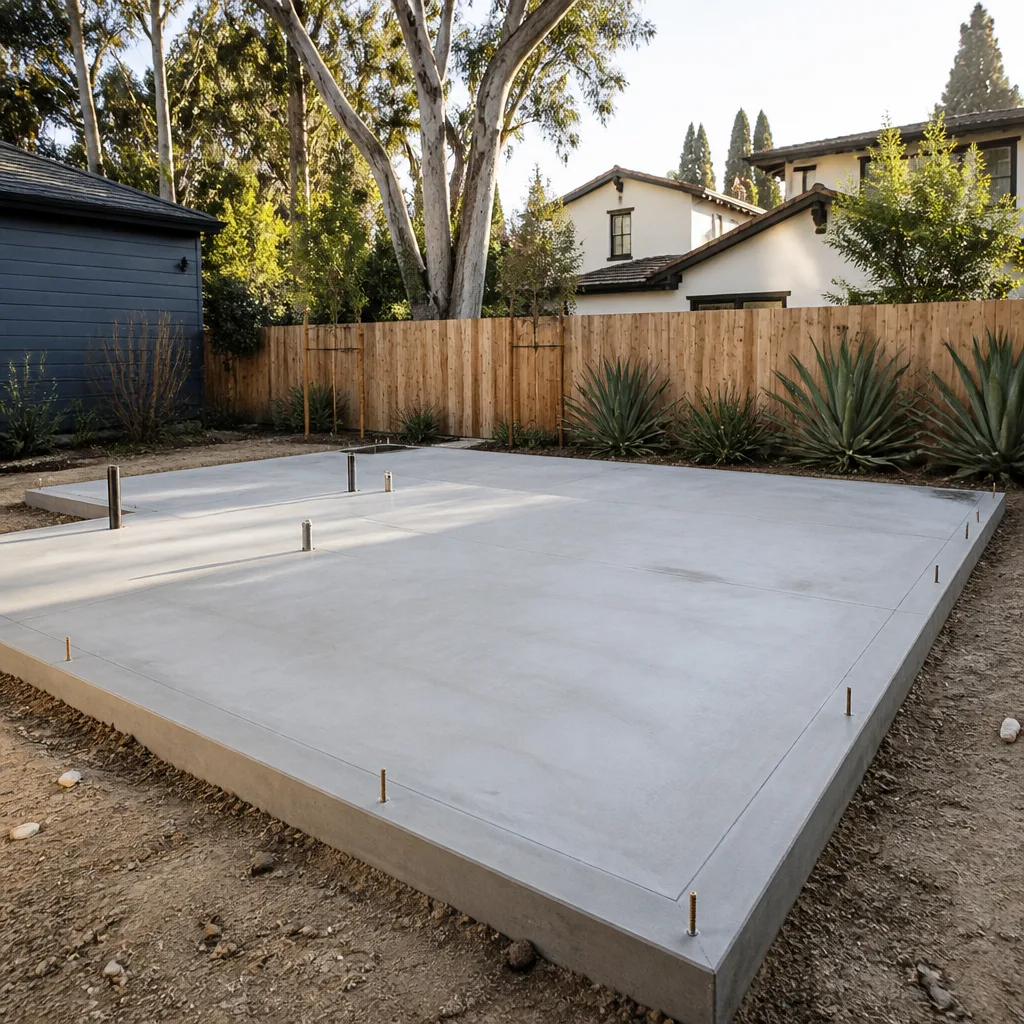
Site prep and utility components are model-agnostic, which is the first thing to understand. A Tuff Shed Premier Pro Series building sits on the same code-relevant foundation principles as a Pro Series, a Tall Barn, or a custom-order Premier Ranch. What changes is the load path. The Premier Pro series uses heavier floor joists, which means the blocking and tie-down hardware are rated for more uplift than what a standard Pro Series shoebox needs. If you’re matching existing hardware, measure the joist spacing. Most Tuff Shed floors are framed 16 inches on center, but the Pro and Premier Pro lines sometimes spec 12 inches on center under heavier live loads like workshops or home gyms.
The other compatibility gotcha is the anchor. Tuff Shed sells its own ground anchors, but they’re sized for typical soil pullout values. San Diego’s decomposed granite and hillside lots in neighborhoods like Clairemont and La Mesa regularly fail the standard anchor’s load rating when the inspector runs the numbers on a permitted ADU conversion. That’s when we swap to epoxy-set threaded rod or a helical pier system. For electrical, the shed’s factory wiring is minimal by design. A standard Tuff Shed ships with one or two outlets and a light, wired for a 15-amp feed. If you’re planning to run tools, a mini split, or a small water heater, you’re upgrading the panel feed, not just replacing a dead receptacle.
Signs Your Tuff Shed Site Prep & Utilities Are Failing
- The floor bounces or squeaks at the corners. This almost always traces back to the blocking underneath. Over time, wood shims compress and the corner piers settle. Left alone, the floor framing starts racking and the wall siding pulls at the fasteners.
- Exposed blocking is splitting or sinking into soft soil. San Diego’s winter rain cycles saturate ground that is hard-packed for eleven months of the year. Concrete deck blocks on un-compacted soil will inch down seasonally, and the shed follows.
- A door that used to swing freely now rubs the jamb. That’s not a hinge problem. The building is out of level. Every latch and door panel is hanging on a frame that’s now slight diamond-shaped.
- Outlets inside the shed trip the breaker or read under 110 volts. This points to either an undersized feeder wire from the house or a corroded connection at an outdoor junction box. We see both constantly within five miles of the coast, where marine air eats aluminum wire and cheap connectors.
- Water pools against the low wall after rain. That’s a site grading failure, not a shed defect. The slab or block pad was poured level, but stormwater has no exit. It saturates the sill plate and invites termites and rot into one of the most expensive-to-fix corners of the structure.
Replacement Cost & What’s Included
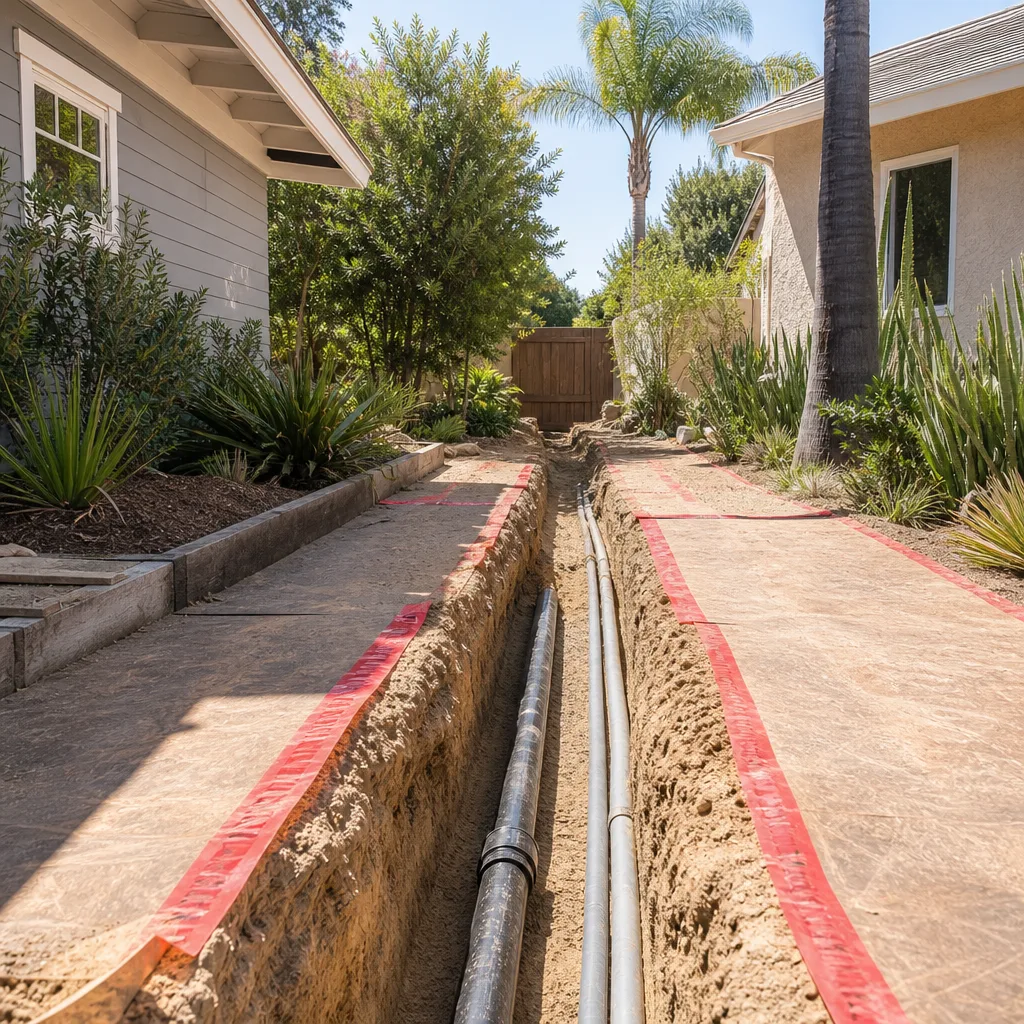
In San Diego, basic site prep correction runs $1,400 – $2,200 for re-leveling a standard 8×10 or 10×12 shed on concrete deck blocks, including new pressure-treated shims and replacement tie-downs. A full re-block on compacted gravel with fresh pier pads and strapping lands between $2,200 and $3,800. Hillside stabilization, which is common in areas like Mount Soledad and parts of Spring Valley, starts at $4,800 and goes up based on how deep we have to go to hit competent soil.
Electrical utility work carries its own range. A straightforward service correction, meaning replacing a failed outlet run or re-terminating the shed’s feeder, runs $600 – $1,000. Upgrading to a 60-amp subpanel with proper grounding starts around $2,200, and trenching new conduit from the house across a typical San Diego backyard adds $25 – $45 per linear foot. Every price we quote is in writing before work begins. You’ll know the number on day one, and that’s the number on the final invoice. No change orders, no surprises at the door.
DIY or Call Us?
There’s a section of this work you can safely handle without calling anyone. Walking the perimeter after rain to check for standing water, looking for daylight under the floor joists, and testing every outlet with a $20 plug tester from any hardware store are all reasonable homeowner tasks. Visual inspection doesn’t require a license. Fixing what you find does.
Leveling a shed that’s drifted out of true is frustrating work if you haven’t done it before. You need a hydraulic bottle jack, a long level, good shims, and patience, because every corner you lift changes the other three. The bigger problem is electrical. The moment you open up an outdoor junction box or start pulling wire, you’re working on something that can hurt you or burn the building down if done wrong. California code requires permits and inspection for nearly every electrical change beyond swapping a lightbulb. This is where a licensed crew is worth the invoice. If you’ve already diagnosed the problem, call us at (858) 264-3027 and we’ll come put a written price on the fix.
FAQs
Done to current code with proper drainage, a re-leveled and re-blocked shed foundation should last 15 to 25 years in San Diego before you’re touching it again. The wildcards are soil movement on hillside lots and unmanaged stormwater, both of which can undo a fresh level job in under five years if drainage isn’t corrected. Call (858) 264-3027 if you want us to look at your drainage while we’re under the shed.
Sometimes. Rusted tie-down straps and cracked shims can often be swapped in place without re-leveling the entire structure. But when the blocking itself has sunken or the piers have tipped, there’s no repair path. The building has to come up, the old hardware comes out, and new pressure-treated blocking goes in. We’ll tell you which situation you’re in before any work starts.
A straightforward re-level and re-block on a standard-size Tuff Shed takes one full day, sometimes two if we’re hauling out old concrete and setting new pads. Electrical corrections run from half a day to two days depending on trenching. You’ll have a clear answer in writing before we schedule the work.
We carry the common hardware on our trucks: pressure-treated shims, galvanized tie-downs, epoxy anchors, deck blocks, and exterior-rated electrical boxes and conduit. If your shed needs a manufacturer-specific component, we’ll source it and show you the receipt. You’re never chasing down a part number from a catalog. Call (858) 264-3027 and we’ll check the truck before we head out.
Written by Reed Calloway, Owner, Fielding ADU San Diego at Fielding ADU San Diego, serving San Diego and nearby areas.