Cover New Detached ADU: The San Diego Owner’s Guide
We stock and install Cover-compatible new detached ADU components in San Diego, and a typical replacement runs $1,450 to $3,400 installed depending on the panel and subsystem involved. Most jobs are done in one visit because we carry the common failure points on the truck. Homeowners usually discover the problem the same way: a door that drags, a wall panel that no longer aligns, or an electrical run that trips a breaker and won’t reset.
Cover builds its ADUs as a panelized system built in a factory and assembled on site. That’s good news for a replacement because the parts are modular and repeatable, not custom framing that a previous contractor has to reverse-engineer. The bad news is that swapping the wrong component, or forcing a panel that has settled out of square, can turn a six-hundred-dollar fix into a wall rebuild. We’ve corrected enough of those in San Diego to know the difference.
Fielding ADU San Diego is an independent service provider and not affiliated with Cover. That matters because we’re free to use OEM components where the spec requires it and honest aftermarket equivalents where the original part was the weak link to begin with.
Which Cover Models This Applies To
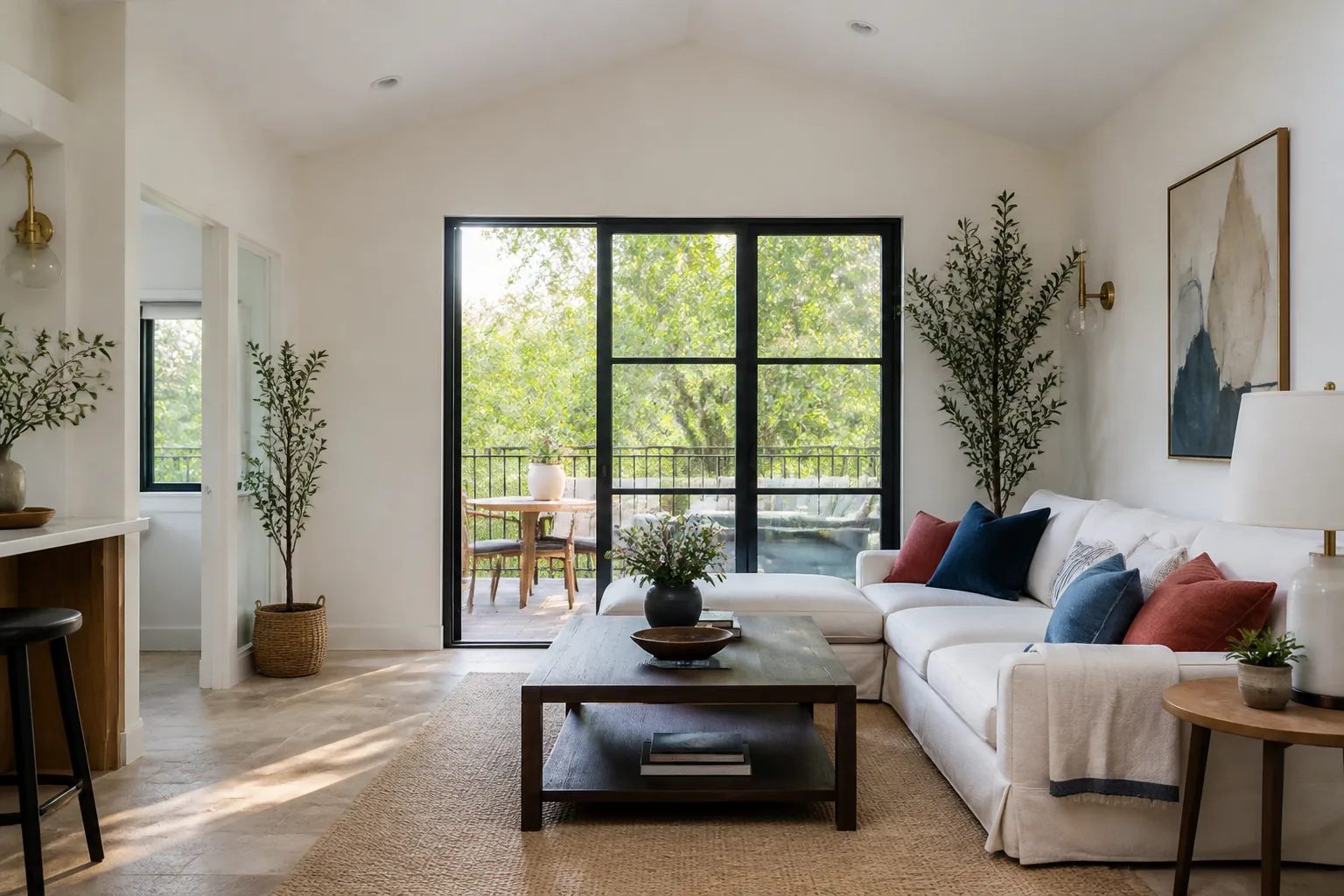
Cover’s new detached ADU line spans a few model families, and the replacement path depends on which one you have. The original Cover units in Southern California were the 440-square-foot studio and the 600-square-foot one-bedroom. Later production added the 900-square-foot two-bedroom and, more recently, the 1,200-square-foot two-story. Within each, the wall, window, and door dimensions are consistent, but the electrical and mechanical subsystems changed between generations.
The fastest way to identify what you have is the serial plate inside the main entry door jamb or under the kitchen sink cabinet. It lists the model designation, the production year, and the panel batch number. If the plate is missing, we measure the wall panel thickness and the mullion spacing on the window assemblies; first-generation Cover panels use a 6-inch structural frame, while later units moved to a 4-inch frame with different corner castings. That one measurement changes which parts we order and how we shim them.
On the parts themselves: Cover uses a mix of proprietary connectors and industry-standard hardware. The proprietary pieces, like the corner locks and the seam gaskets, we source from Cover directly or from a known San Diego supplier who keeps them in stock. The standard pieces, like the door rollers and the electrical disconnects, we can often upgrade to something better than what the factory shipped. If you’re holding a part number from your owner’s manual, bring it to the call. It saves a site visit and gets the price in writing faster.
Signs Your Cover New Detached ADU Is Failing
- Doors that stick or won’t close square. The panelized wall above the door frame has shifted, usually at the corner lock. This is the most common failure we see in San Diego because seasonal soil movement in areas like Clairemont and Mira Mesa flexes the foundation pads and transfers the stress up through the wall panels.
- Visible gap at a wall seam or ceiling line. The seam gasket has compressed or torn, which lets air and moisture in. A breathable gap of an eighth of an inch is normal; a gap you can slide a paint key into is not.
- Water staining at the bottom edge of an exterior panel. The panel wiper seal or the sill flashing has failed, and coastal moisture in neighborhoods like Ocean Beach and Point Loma gets behind the panel face. Water that sits in the lower channel starts to corrode the panel clips.
- A breaker that trips repeatedly on a kitchen or HVAC circuit. Cover’s early electrical runs used aluminum feeders at the main junction block, and those connections loosen over time. A loose connection overheats, the breaker trips, and if you keep resetting it, the wire end burns.
- Windows that are suddenly hard to operate or no longer seal at the latch. The window cassette has shifted within the wall panel, or the factory latch has worn to the point where the sash won’t sit tight. Fogged insulated glass usually means the seal has failed and the whole sash needs replacement.
Replacement Cost & What’s Included
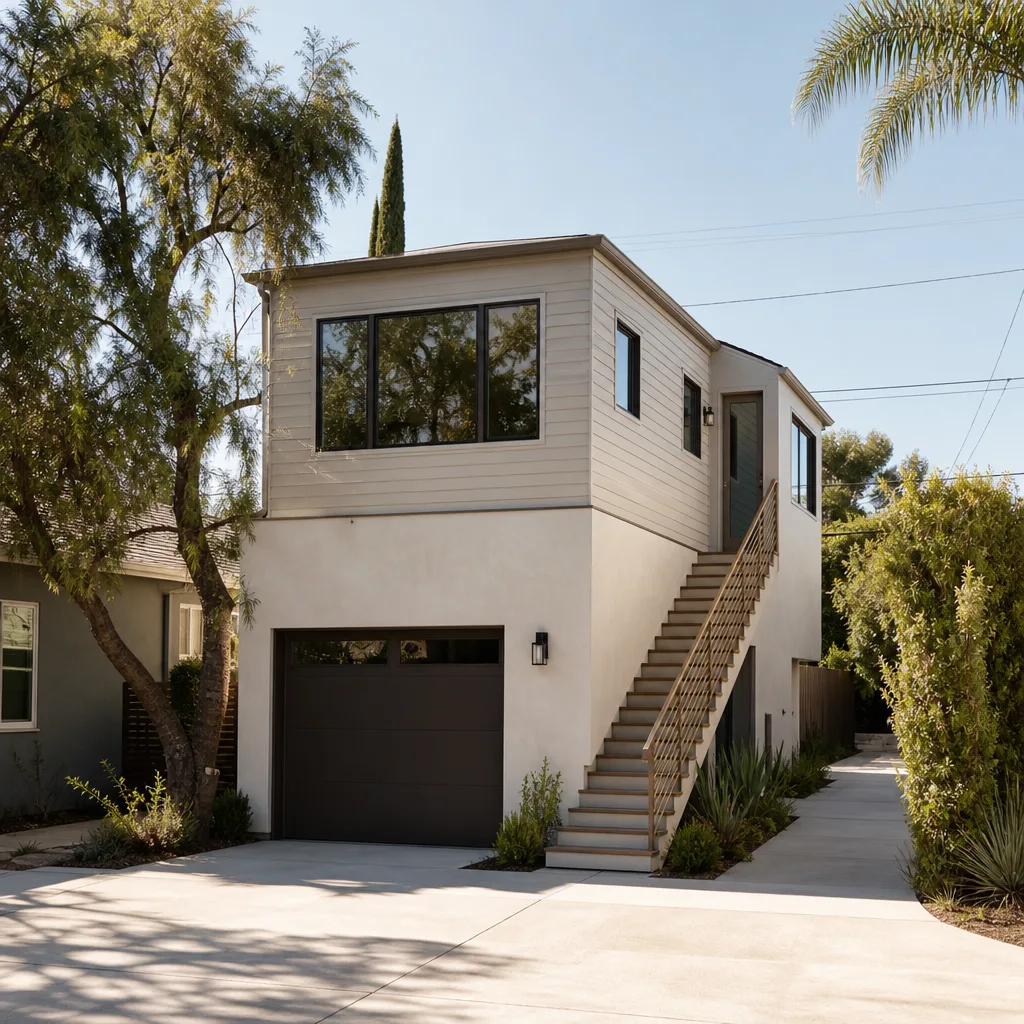
In San Diego, a Cover new detached ADU component replacement typically falls between $1,450 and $3,400 installed. The low end covers items like a door roller set, a corner lock, a full-wall seam gasket, or a window sash. The high end covers an entire wall panel replacement with re-flashing, or a complete electrical junction block and feeder re-run. The cost for a full panel is driven by whether the panel is still in production, whether the interior finish matches what’s already on your walls, and whether we’re dealing with paint-grade or custom color.
Every quote includes the part, the labor, the fasteners and flashing, haul-away of the failed component, and the written one-year workmanship warranty that comes with the Garrison Standard. The price goes in writing before we touch the unit, and the number you approve is the number on the final invoice. We don’t “discover” scope after we open the wall. If we open a panel and find hidden damage, we stop, document it, and bring you the corrected number before we spend another dollar.
Permit fees are separate when the city requires one, which is more common on structural panel replacements than on hardware swaps. We’ll tell you upfront whether your specific replacement triggers a permit so you’re not surprised by an inspector’s visit.
DIY or Call Us?
You can check a few things safely without opening the unit up: the serial plate, the visible seams, the door alignment, the breaker condition. Those observations help you describe the failure when you call, and they help us bring the right part on the first trip. But working on a panelized ADU is not like hanging a door in a framed house. The panels are structural and under load. Removing a corner lock without bracing the panel above can drop the edge of a wall onto whoever is standing under it. The electrical runs are live at the junction block unless the whole unit is de-energized at the main panel, and the early Cover feeders carry 240 volts, not 120.
This is a job for someone who has worked on this specific system before. If the panel seam has opened more than a quarter inch, or if you can see a burned terminal at the junction block, stop there and call us at (858) 264-3027. We’ll get Reed or a senior tech out to look at it, and the quote is free.
FAQs
A properly installed Cover panel, seam gasket, and corner lock should last 20 to 25 years in San Diego, but the coastal humidity in neighborhoods west of the 805 shortens that for exterior seals and door hardware. We tell owners to budget for a hardware-level refresh at roughly the 10- to 12-year mark, before a small gasket failure becomes a bigger panel issue. If your unit is approaching that age, call (858) 264-3027 and we’ll do a condition walk with you.
Sometimes. A corner lock that’s simply loose can often be re-torqued, and an electrical terminal that hasn’t burned can be cleaned and re-tightened. But once a gasket has torn, a panel clip has corroded, or a feeder has arced, replacement is the only fix that holds. We’ll always tell you which situation you’re in, and the repair quote is separate from the replacement quote so you’re deciding with real numbers in front of you.
Most hardware-level replacements, like door rollers, corner locks, seam gaskets, and window sashes, take one visit of two to four hours. A full wall panel replacement runs a day and a half because the panel needs to be set, shimmed, fastened, flashed, and re-finished at the seams. We pull the permit when needed and that can add a day of waiting on the city, but the actual work stays predictable.
We stock the common failure points for Cover new detached ADUs on the truck: corner locks, seam gaskets, door rollers, window latches, junction block connectors, and the breaker-compatible fittings for early 240-volt feeders. For whole panels and proprietary interior finishes, we order from Cover’s parts network or our San Diego supplier, and those arrive within three to five business days. We’ll tell you on the first call whether we’re working out of the truck or waiting on a delivery.
No. The price we put in writing is the price you pay, unless you ask us to add scope. If we open a panel and find damage we couldn’t see from the outside, we stop and bring you a written change order before doing the additional work. You approve the change, or we re-secure the unit and you pay only for the work done to that point. That’s how we run every job, including the ADUs we build from the ground up for brands like Abodu, Cover, and Dvele. Put it in writing, pull the permit, do the work.
If your Cover new detached ADU has a failed part, or if something just doesn’t feel right and you want a professional opinion, call Fielding ADU San Diego at (858) 264-3027. We’ll help you identify what failed, give you a written price before any work starts, and make the repair the way it should have been done the first time.
Written by Reed Calloway, Owner, Fielding ADU San Diego at Fielding ADU San Diego, serving San Diego and nearby areas.