James Hardie Junior ADU Conversion: The San Diego Owner’s Guide
If you have a James Hardie-backed junior ADU and a failing part in the conversion, we stock the replacement components on our trucks and install them for $225 to $485 in most San Diego neighborhoods, parts and labor included. Most owners discover the problem the same way: a corner pulls away from the wall, a joint opens up, or moisture staining shows up where two planes meet. Reed Calloway and our crew have corrected enough of these in Clairemont, North Park, and La Mesa to know exactly what fails first and what it costs to make it right.
Which James Hardie Models This Applies To
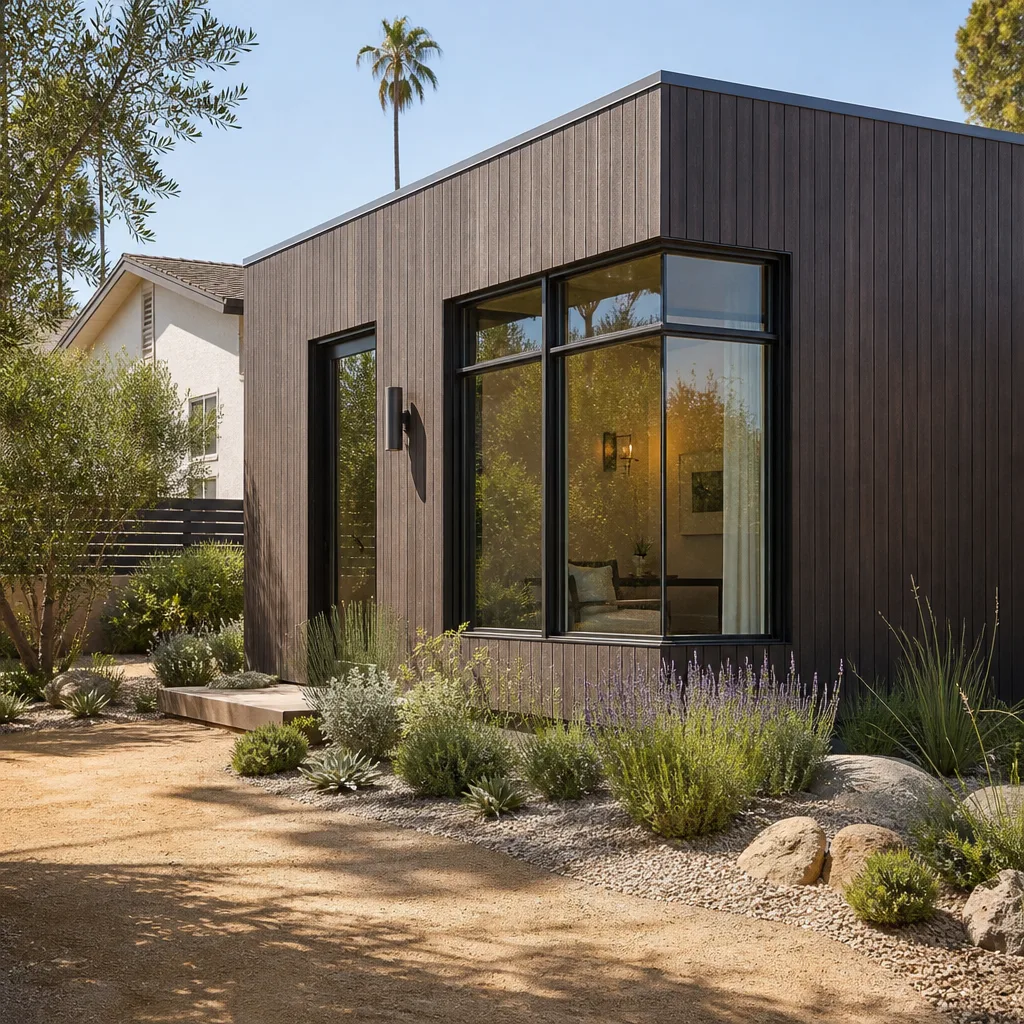
Junior ADU conversions using James Hardie siding almost always fall into two camps: HardiePlank lap siding on a converted garage, or HardiePanel vertical sheets on a prefab or site-built rear unit. The failure point differs between them. HardiePlank corners and butt joints open first; HardiePanel pulls at the fasteners when a wall is undersized or the nailing pattern was skipped. Before you buy anything, check the back of a removed piece or an exposed edge for the HardieZone marking. HZ10 is the spec for San Diego’s dry, coastal-sun exposure. HZ5 product installed here is a mismatch that will telegraph every thermal cycle through the paint line.
We install genuine James Hardie replacement pieces, not third-party lookalikes. The fiber-cement density differs enough between brands that a mixed wall will crack at the meeting line within two or three summers. If the piece is a specialty profile no longer in production, we will say so plainly and offer the closest current Hardie match rather than pretend a patch is invisible.
Signs Your James Hardie Junior ADU Conversion Is Failing
- Corner trim pulling away from the wall plane. This is the first visible sign on a converted garage. The corner board swells or the underlying framing moved. Water gets behind it and the crack widens every season.
- Caulk lines cracking or peeling from the siding edge. Fiber cement expands and contracts more than vinyl or wood. When the wrong sealant was used, the joint fails within two years and moisture tracks behind the piece.
- Nail pops or screw heads visible under paint. The fastener was driven too deep or missed the stud. The piece loses its hold, and wind on a San Diego canyon lot will start working it loose.
- Efflorescence or chalky white staining at the bottom edge. A wicking issue. The siding is touching soil, concrete, or a landscape bed. James Hardie requires a 6-inch clearance from grade; when it is buried, the board draws moisture up and the face starts to fail.
- Swelling at horizontal lap joints. Water is entering behind the lap and pushing the fibers apart. Once the joint has swollen, the lower piece is compromised and patching won’t hold.
Replacement Cost & What’s Included
In San Diego, a single James Hardie board replacement on a junior ADU runs $225 to $485 installed, depending on the profile and how much trim or sealant work surrounds it. A corner failure with two affected boards and new corner trim runs $400 to $800. A full-reveal lap repair on a converted garage wall is usually $600 to $1,200 if we are pulling and replacing multiple courses. Every number goes in writing before a tool comes off the truck. No change orders, no extras at the door. Parts are genuine James Hardie, fasteners are stainless or hot-dipped galvanized, and the sealant is matched to fiber-cement expansion rates for San Diego’s coastal sun. The work is covered by the Garrison Standard, one full year in writing; if the joint opens or the board moves, we come back and correct it at no charge.
DIY or Call Us?
You can check a lot from the ground: look at the bottom edge clearance, check whether caulk lines have separated, and press on suspect boards to feel for movement. What you should not do is pull a nail-sunk board off the wall with a pry bar if you do not know how the piece is fastened. Fiber cement snaps when flexed, and a snapped HardiePlank board at height or over a window is an injury waiting to happen. The work is not high-tension in the garage-door spring sense, but removing fasteners from a loaded wall requires a steady hand and the right backing. If the board is loose, call us at (858) 264-3027 and we will price the repair before we touch it.
FAQs
James Hardie fiber cement typically lasts 30 to 50 years in San Diego, but the fasteners, sealants, and corner flashings fail in 10 to 15 years if the original install skipped flashing or used interior-grade screws. The board itself rarely fails first; the connection points do. Call (858) 264-3027 and we will inspect the joints and tell you what is failing before you pay for anything.
Yes, in limited cases. A small hole or hairline edge crack can be patched and sealed if the board is still properly fastened. A swelled lap joint, a pulled corner board, or a section with multiple nail pops cannot be reliably repaired and should be replaced. We will tell you which one you have before we quote, not after.
A single board replacement takes 60 to 90 minutes once the wall is open. A corner or multi-course repair is typically half a day. The sealant and touch-up paint add curing time, so we may ask you to keep water off the repaired area for 24 hours.
We stock standard HardiePlank lap profiles, common corner boards, stainless fasteners, and the correct fiber-cement sealant on our trucks. Specialty profiles or non-current colors may need a day or two from our supplier. If you are not sure what profile you have, send a photo or call and we will match it.
Fielding ADU San Diego is an independent local service provider and is not affiliated with James Hardie. We also work with Abodu, Cover, and Dvele prefab units. Put it in writing, pull the permit, do the work.
Written by Reed Calloway, Owner, Fielding ADU San Diego at Fielding ADU San Diego, serving San Diego and nearby areas.